
Wearing Heart and History: Magdalena’s 9,000km Journey from Poland to Nikko in Her “Traditional yet Modern” Hakama Style
1. プロローグ:ワルシャワから日光へ、9,000kmの旅路
Introduction: A 9,100km Journey from Warsaw to Nikko
こんにちは!日光着物レンタルCOCON NIKKO店長の遠藤実沙です。 世界遺産・日光には毎日、世界中の地図の端から端からお客様がやってきます。今日ご紹介するのは、はるばる東欧の美しい国、ポーランドからお越しのマグダレーナ・ビル(Magdalena Bil)様の物語です。
ポーランドの首都ワルシャワから日光までは、直線距離にして約9,100km。飛行機と電車を乗り継ぎ、十数時間。そんな長い旅路を経て、彼女が私たちの店を選んでくれた理由。それはただの「観光」ではなく、日本の文化に深く没入したいという純粋な好奇心でした。
Hello! I am Misa Endo, the manager of Nikko Kimono Rental COCON NIKKO. Every day, guests from all corners of the world visit the World Heritage site of Nikko. Today, I want to share the story of Magdalena Bil, who traveled all the way from the beautiful Eastern European country of Poland.
The distance from Warsaw to Nikko is approximately 9,100 kilometers. After a journey of over a dozen hours across continents, she chose our shop not just for “sightseeing,” but out of a pure curiosity to deeply immerse herself in Japanese culture.
2. コーディネートの妙:ダークカラーの聖域に映える「光」
The Art of Coordination: “Light” Shining in a Dark-Toned Sanctuary
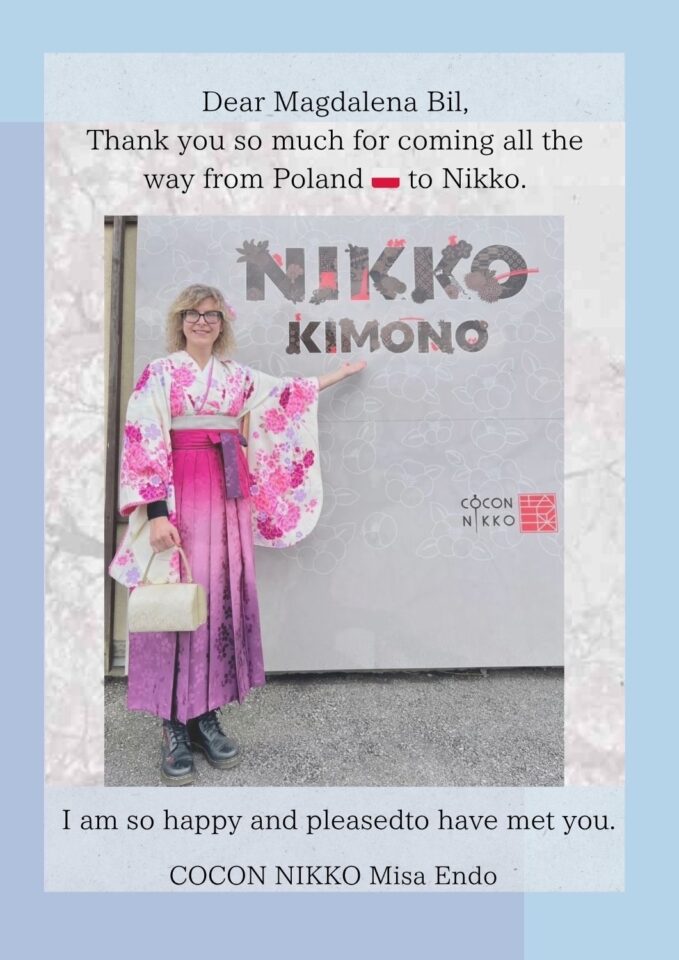
マグダレーナ様は、日本初訪問。昨日は浅草で赤地の華やかな振袖を楽しまれましたが、ここ日光で彼女が選んだのは、これまでの「和」のイメージをモダンに昇華させた「明るい色の袴(はかま)」スタイルでした。
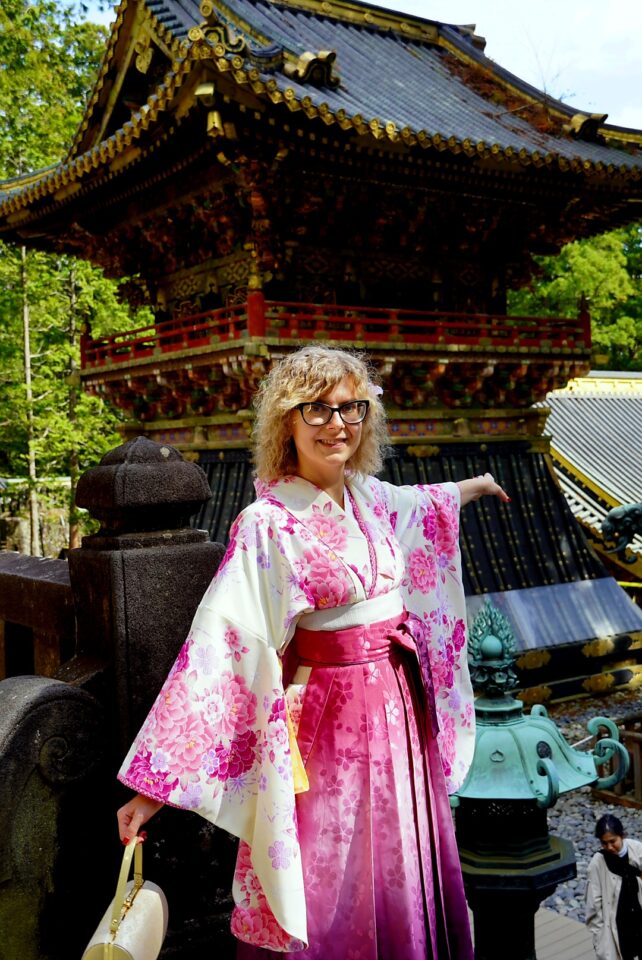
彼女が言った一言が、私の心に深く残っています。 「日光の神社の建物はダークカラー(重厚な色)が多いから、着物は明るいライトカラーがとても映えると思うの」
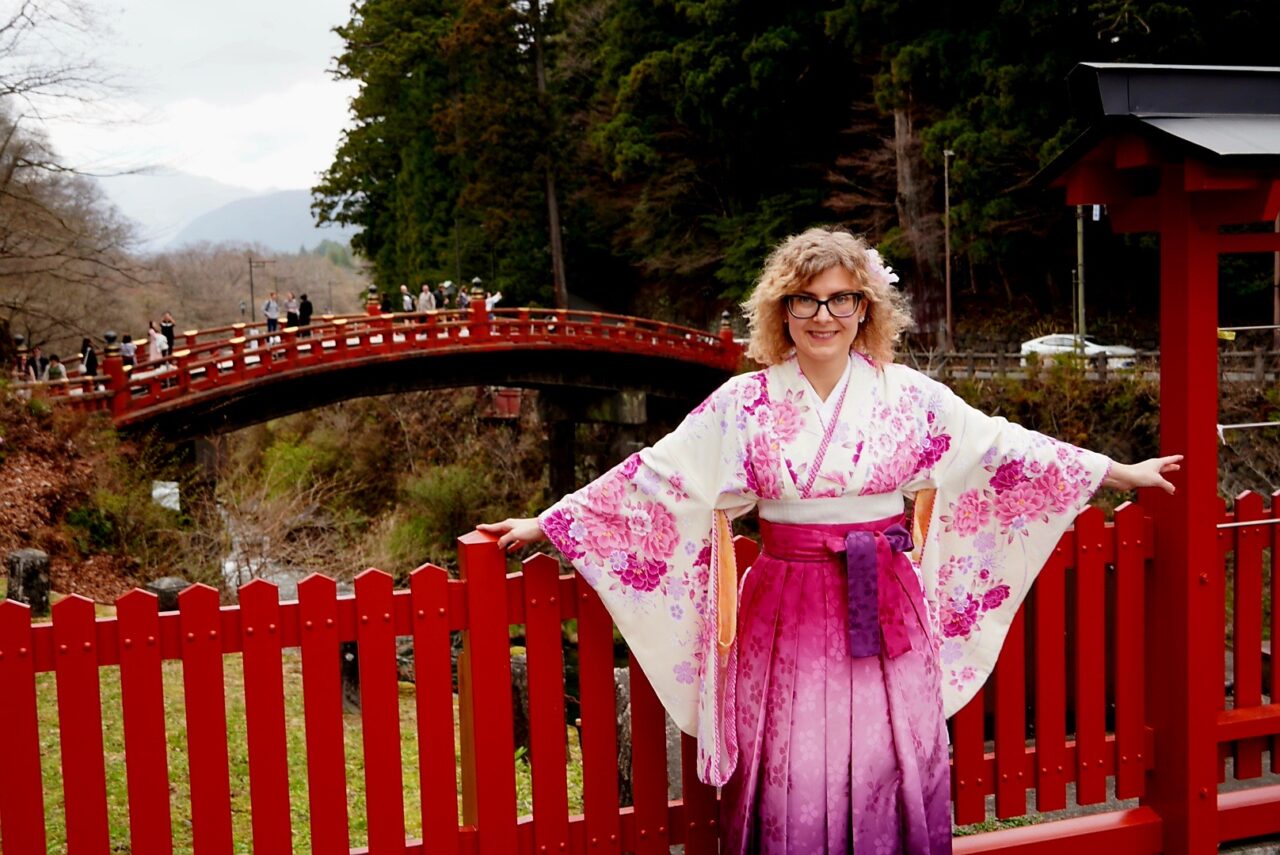
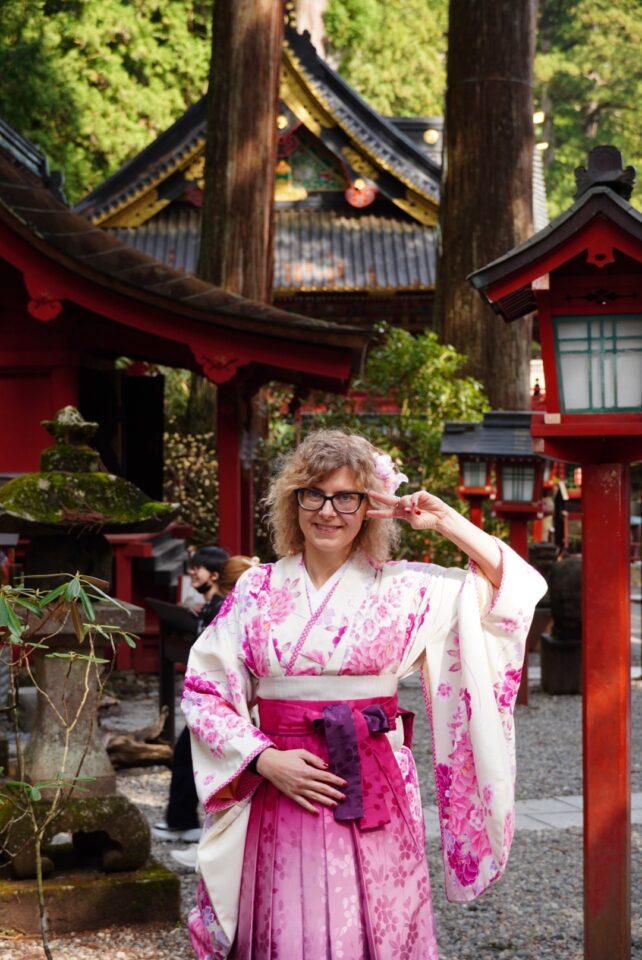
まさに、カラーコーディネーターとしての私を唸らせる素晴らしい感性です。選ばれたのは、白地に鮮やかなピンクの花々が咲き乱れる着物。そこに合わせるのは、上部の鮮やかなマゼンタから裾にかけて深いパープルへと移り変わるグラデーションの袴です。
Magdalena is visiting Japan for the first time. While she enjoyed a vibrant red Furisode in Asakusa yesterday, here in Nikko, she chose a “light-colored Hakama” style that modernizes the traditional Japanese image.
One thing she said stayed with me: “Since the shrine buildings in Nikko are mostly dark-toned and solemn, I think light-colored clothing will stand out beautifully.”
This insight truly impressed me as a color coordinator. She chose a kimono with a white base and vibrant pink flowers, paired with a Hakama featuring a stunning gradient that transitions from a bright magenta to a deep, royal purple.
3. 花模様の象徴:桜と牡丹に込められた願い
Flower Symbolism: Wishes Woven into Cherry Blossoms and Peonies
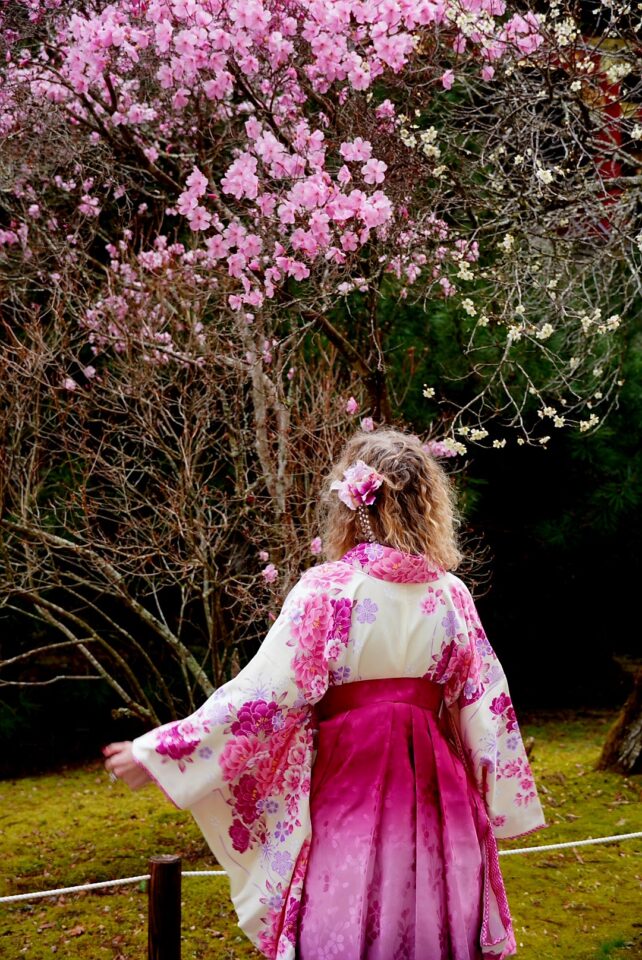
今回、マグダレーナ様が纏った着物には、日本を象徴する花々が描かれています。それぞれの模様には、古くから伝わる深い意味が込められています。
- 桜(Sakura): 「新しい始まり」と「豊かさ」の象徴です。春に一斉に咲く桜は、古来より五穀豊穣の神様が宿る木とされてきました。マグダレーナ様の日本初の旅が、実り豊かなものになるようにという願いにぴったりです。
- 牡丹(Botan): 「百花の王」と呼ばれ、「高貴」「幸福」「富貴」を象徴します。幾重にも重なる大輪の花びらは、女性の気品ある美しさを引き立てます。
明るい笑顔のマグダレーナ様に、この「幸福」を象徴する牡丹の模様は、まるで彼女の内面を映し出しているかのようでした。
The kimono Magdalena wore is adorned with flowers that symbolize Japan. Each pattern carries a deep, ancient meaning.
- Sakura (Cherry Blossoms): A symbol of “new beginnings” and “abundance.” In ancient times, the cherry tree was believed to be the dwelling of the gods of harvest. It was a perfect match for her first journey to Japan, wishing for a fruitful experience.
- Botan (Peony): Known as the “King of Flowers,” it symbolizes “nobility,” “happiness,” and “prosperity.” The many layers of petals enhance a woman’s elegant beauty.
For Magdalena, whose smile is as bright as a sunray, the peony patterns perfectly reflected her inner radiance.
4. 袴の歴史と「大正ロマン」の美学
The History of Hakama and the “Taisho Roman” Aesthetic
マグダレーナ様のスタイリングで特筆すべきは、足元のブーツです。これは「大正ロマン」と呼ばれる、日本の明治・大正時代に流行したスタイルです。
袴は元々男性の正装でしたが、明治時代、学ぶ女性たちの制服として採用されました。それは、女性の社会進出や自由の象徴でもありました。そこに西洋から入ってきたブーツを合わせるスタイルは、当時の女性たちの「和と洋の融合」という革新的な美学から生まれたものです。
自立したプロフェッショナルな女性であるマグダレーナ様に、この「自由と教育」の象徴である袴スタイルは、まさに最高の選択でした。
A notable detail in Magdalena’s styling is her boots. This is a classic “Taisho Roman” look, a style that became popular in Japan during the late 19th and early 20th centuries.
Originally, Hakama were formal wear for men, but during the Meiji era, they were adopted as school uniforms for women. They became a symbol of women’s independence and education. Pairing them with Western boots was an innovative aesthetic born from the merging of East and West.
As a professional woman herself, traveling with her engineer boyfriend, this Hakama style—a symbol of freedom and learning—was the perfect choice for Magdalena.
5. ポーランドと日本の共通点:不屈の精神
Poland and Japan: Shared Resilience
マグダレーナ様との会話で、ポーランドの紹介についても触れました。実は、ポーランドと日本は非常に深い共通点を持つ国です。
ポーランドも日本も、歴史の中で何度も困難に直面し、その度に「不屈の精神」で立ち上がってきた歴史があります。ワルシャワの美しい旧市街が戦火から奇跡の復興を遂げた情熱は、日光の社寺を何百年も修復し、守り続けてきた日本の職人たちの情熱と、どこか重なる部分があります。
We also spoke about her home country, Poland. Interestingly, Poland and Japan share a deep spiritual connection. Both nations have faced immense hardships throughout history and have risen again each time with a “resilient spirit.” The passion seen in the miraculous reconstruction of Warsaw’s Old Town resonates with the passion of Japanese craftsmen who have preserved and restored Nikko’s shrines for centuries.
6. マグダレーナ様からの感動のメッセージ
A Heartfelt Message from Magdalena
彼女は体験後、Googleマップにこんな素晴らしいメッセージを残してくれました。
「彼女(実沙店長)は日本の着物の美しさを観光客と分かち合うことにとても熱心で、その情熱は体験のあらゆる場面で感じられました。彼女から溢れるポジティブなエネルギーのおかげで、体験全体がより楽しく、思い出深いものになりました。」
この言葉は、私にとって何よりの報酬です。 彼女は今日、日光で明るい色の袴を纏い、明日は江戸村で日本の歴史をさらに深く体験されます。初めての温泉も楽しまれるとのこと。
Magdalena left a wonderful message on Google Maps after her visit:
“She is so passionate about sharing the beauty of Japanese kimono with tourists, and that passion was felt in every aspect of the experience. The positive energy radiating from her made the whole experience more enjoyable and memorable.”
These words are the greatest reward for me. Today, she wore a light-colored Hakama in Nikko, and tomorrow she will dive even deeper into Japanese history at Edo Wonderland, including her first-ever Onsen experience.
7. 結びに:世界は美しさで繋がっている
Conclusion: Connected by Beauty
9,000kmの距離、言葉の違い、文化の違い。 それらをすべて超えて、一枚の布、一つのコーディネートが、一人の女性の「人生の宝物」になる。
マグダレーナ様、COCON NIKKOを選んでくださって本当にありがとうございました。 あなたの纏ったライトカラーの袴は、日光のダークカラーの歴史の中に、新しい「光」を灯してくれました。またいつか、あなたがこの場所へ戻ってくる日を、私たちは笑顔でお待ちしています!
9,000 kilometers, language barriers, cultural differences—all of these are transcended by a single outfit and a shared sense of beauty.
Magdalena, thank you so much for choosing COCON NIKKO. Your light-colored Hakama brought a new “light” to the dark-toned history of Nikko. We look forward to the day you return!
大切な人と、大切な時間を。COCON NIKKOが贈る、かけがえのない体験
COCON NIKKOがお客様に提供したいのは、単なる着物レンタルではありません。
* 普段とはちょっと違う、装いで:いつもの日常を離れ、特別な装いで新たな一日をスタートする喜び。
* 新たな一面を:着物を身にまとうことで、普段は気づかなかった自分の魅力に気づく瞬間。
* ワクワクドキドキ:初めての着物体験、日光の美しい景色、新しい自分との出会い…その全てが、あなたの心を躍らせ、胸をときめかせるでしょう。
* 特別な時間を過ごせますように:大切なパートナー、親しい友人、愛する家族と、心に残る、かけがえのない時間を過ごしてほしい。そのお手伝いをすることが、私たちの何よりの喜びです。
COCON NIKKOは、ご来店くださるすべてのお客様に、最高の笑顔で、心ゆくまで日光での着物体験を楽しんでいただきたいと心から願っています。
日光での着物体験は、きっとあなたの人生に彩りを加え、忘れられない一日となるでしょう。
さあ、あなたもCOCON NIKKOで、心ときめく着物旅へ出かけませんか?
私たちは、いつでも笑顔であなたのお越しをお待ちしております!
「着物を着る」という体験
「着物を着る」という体験は、あなたの日常に、非日常の輝きを与えてくれます。
それは、まるで魔法にかかったかのように、あなたの心を解き放ち、新たな自分を発見するきっかけとなるかもしれません。
普段は気にも留めなかった建物の細部に目を向けたり、自然の美しさに改めて感動したり、地元の人々との温かい交流が生まれたり…着物というフィルターを通して見る日光は、きっと今までとは全く違う表情を見せてくれるはずです。
そして、その日の思い出は、ただの「観光」として消費されるのではなく、あなたの心に深く刻まれ、かけがえのない宝物となるでしょう。
COCON NIKKOは、単に着物をレンタルするだけの場所ではありません。
私たちは、お客様一人ひとりの「最高の思い出作り」を全力でサポートする、あなたの「旅の相棒」でありたいと思っています。
さあ、あなたもCOCON NIKKOで、心ときめく着物旅へ出かけませんか?
私たちは、いつでも笑顔であなたのお越しをお待ちしております!
COCON NIKKOは、東武日光駅から徒歩5分という好立地。駅チカだから、到着してすぐに着付けを済ませて、身軽に観光に出発できます。
手ぶらでOK!必要なものは全て揃っています。
プロの着付けスタッフが、一日中キレイに着こなせるよう、丁寧に心を込めてお手伝いします。
COCON NIKKOとは
世界遺産の社寺が建ち並ぶ日光のまちで、“一生の想い出になる旅”をお手伝いしている着物レンタルサロンです。
COCON NIKKOでは、季節の色や街並みに合わせたレトロモダンな着物を多数ご用意しています。
初めての方でも安心して楽しめるよう、ヘアセットから着付け、コーディネートまでフルサポート。